How Cloud Ripples Does DevOpsShip More Often, Break Less
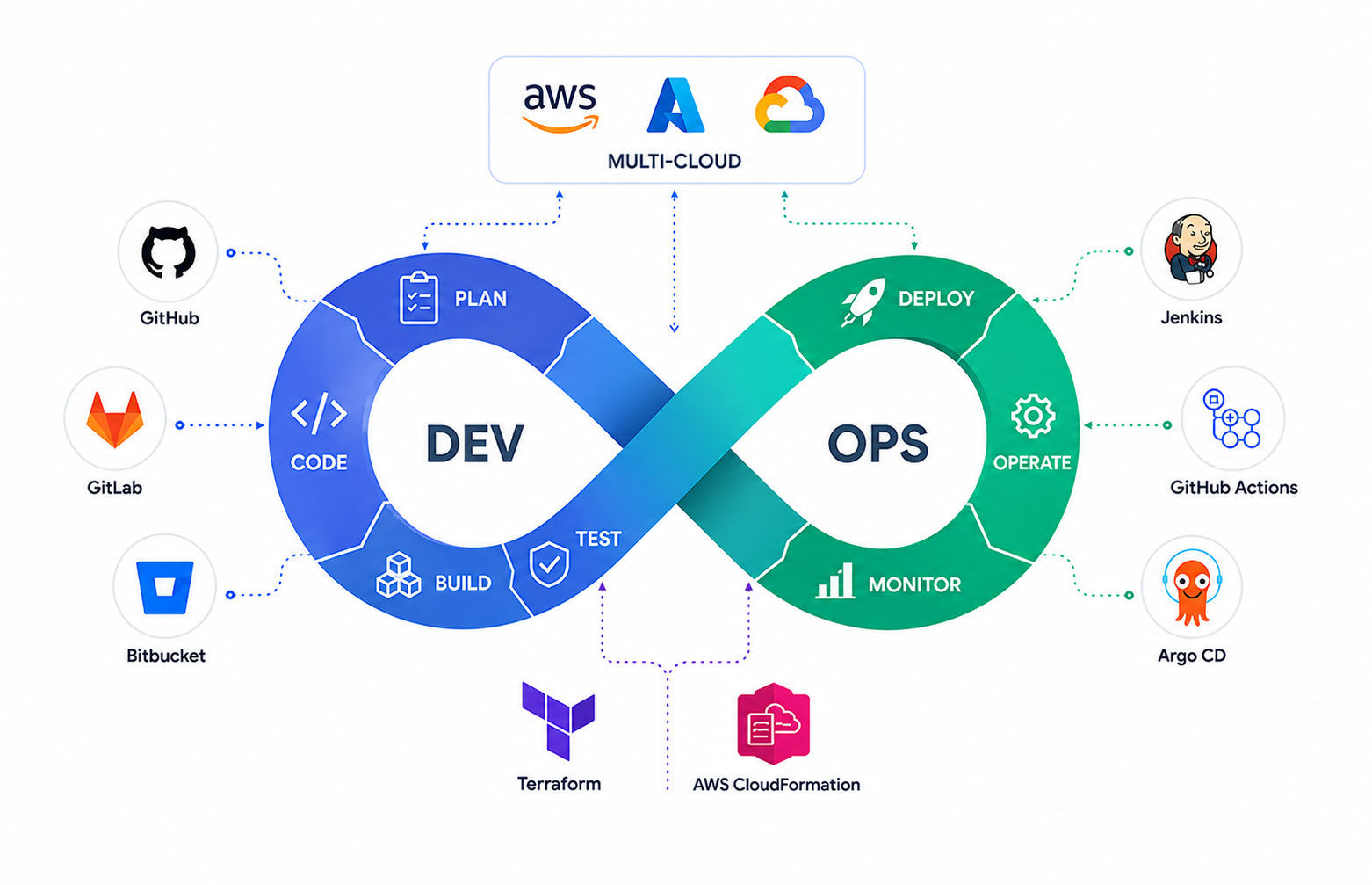
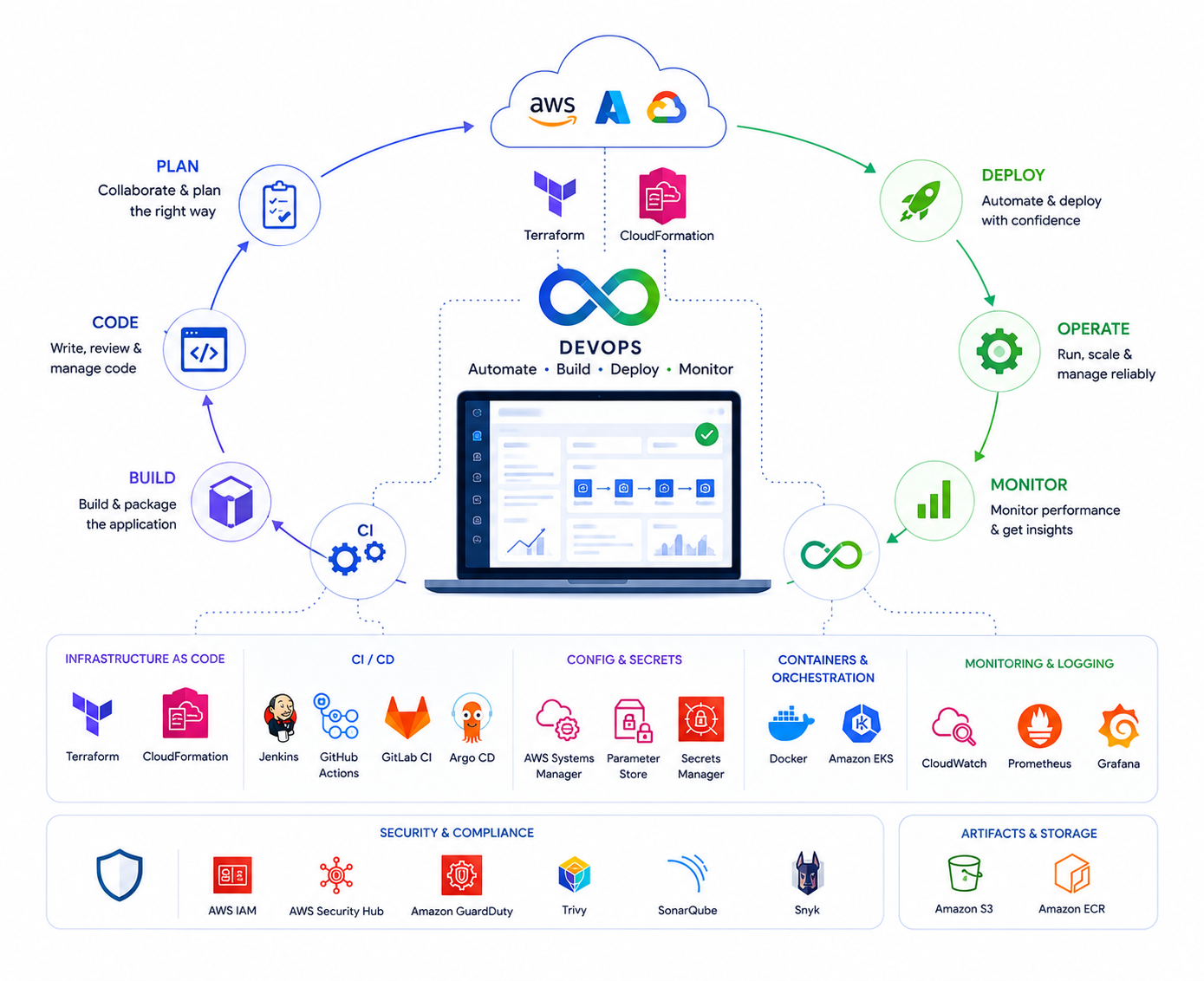
We build the path your code takes from a developer's commit to production — on AWS, Azure or Google Cloud — and then we keep it fast and boring. Pipelines run in Jenkins, GitHub Actions or GitLab CI, with Argo CD delivering into Kubernetes. Automated tests, SonarQube analysis, and Trivy and Snyk vulnerability scans sit in the pipeline as gates rather than afterthoughts, so releases go out on a normal Tuesday afternoon instead of a weekend maintenance window.
Underneath the pipelines, everything is defined as code — Terraform where you want one language across clouds, CloudFormation or Bicep where a platform's native tooling fits better. Containers are built with Docker and run on managed Kubernetes, whether that is Amazon EKS, AKS or GKE, with images and build artifacts versioned in a registry such as Amazon ECR rather than passed around by hand. Configuration and credentials live in a managed secrets store — AWS Systems Manager Parameter Store and Secrets Manager, Azure Key Vault, or Google Secret Manager — never pasted into a CI variable. An environment can be rebuilt from the repository instead of remembered by whoever set it up, which is what makes a rollback a routine action rather than an incident.
We instrument what we build so you can see it. Metrics, logs and traces go into Prometheus and Grafana, or into CloudWatch, Azure Monitor or Google Cloud Operations if that is what your teams already watch, with alerts tuned to things a human should actually wake up for. Security posture gets the same treatment: least-privilege access policies, and services like AWS Security Hub and GuardDuty, Microsoft Defender for Cloud, or Google Security Command Center surfacing misconfiguration and threats before they matter. Deployment frequency, lead time, change failure rate and time to restore are the numbers we report against.
That's what sets Cloud Ripples apart from a tooling project: we work alongside your developers and hand over pipelines they can run themselves, rather than leaving behind automation only we understand.